As sustainability becomes a higher priority across procurement and supply chain functions, many businesses are reassessing the protective packaging materials used in distribution. Recyclable paper void fill is being adopted more widely because it combines effective transit protection with improved material recovery and reduced reliance on plastic.
Sustainable Packaging Scotland provides paper-based void fill systems that enable businesses to protect products in transit while reducing dependence on plastic-based protective packaging formats.
Growing consumer scrutiny of packaging waste is also influencing material selection, making recyclable void fill an important consideration in customer experience, sustainability reporting, and brand presentation.
Why businesses are switching from plastic airbags to paper alternatives
Businesses are increasingly prioritising packaging materials that deliver consistent protective performance, support sustainability targets, and integrate efficiently into fulfilment workflows. Paper voidfill meets these requirements by combining effective cushioning with easier handling and reduced plastic use.
Both plastic airbags, and most paper voidfill systems require an element of equipment/machinery, but both work differently. Airbags require inflating and heat sealing, where as paper is mechanically dispensed or ‘crimped’ by a machine. Airbag machines typically require more maintenance of the heat sealing parts, where as machines like the Protega 125 are reliably built and required little or no maintenance.
The protective performance or airbags may decline with heavier products, as sustained compressive loads can reduce chamber integrity and weaken shock absorption in transit. Inflation, handling, and pack placement can also extend cycle times on the fulfilment line, creating avoidable labour pressure during peak dispatch periods. Protega paper void fill offers a plastic-free alternative that reduces dependence on inflatable plastic formats while giving superior protection and cushioning performance.
Key technical and operational reasons businesses are adopting paper-based protective formats include:
- Consistent protective performance during transit
- Improved pack presentation and material control during unboxing
- Better alignment with plastic-reduction and sustainability targets
- More standardised packaging output across fulfilment operations
As e-commerce volumes continue to increase, packaging presentation, operational throughput, and sustainability performance are becoming increasingly important considerations for brands seeking to improve customer satisfaction and reduce environmental impact.
The benefits of paper void fill
Paper void fill provides cushioning and void stabilisation while also delivering measurable environmental and operational benefits in packing operations.
Key functional benefits of paper void fill include:
- Recyclable, fibre-based material with FSC-certified options
- Improved pack presentation and material consistency
- Reduced plastic input across packaging operations
- Simplified disposal for end users through paper waste streams
- Compact storage and efficient point-of-pack dispensing
- Effective cushioning and void restraint during transit
Paper void fill also supports a cleaner, more controlled unboxing experience that aligns with current sustainability expectations.
Protega Global’s sustainable paper void fill solutions
Protega Global provides a range of paper-based protective packaging systems, including void fill and paper bubble wrap, designed to improve packing efficiency, reduce plastic dependency, and maintain product protection across fulfilment operations.
These systems are suitable for a wide range of sectors that require efficient void management, presentable pack-out, and dependable in-transit protection.
Hex-a-Fil paper void fill
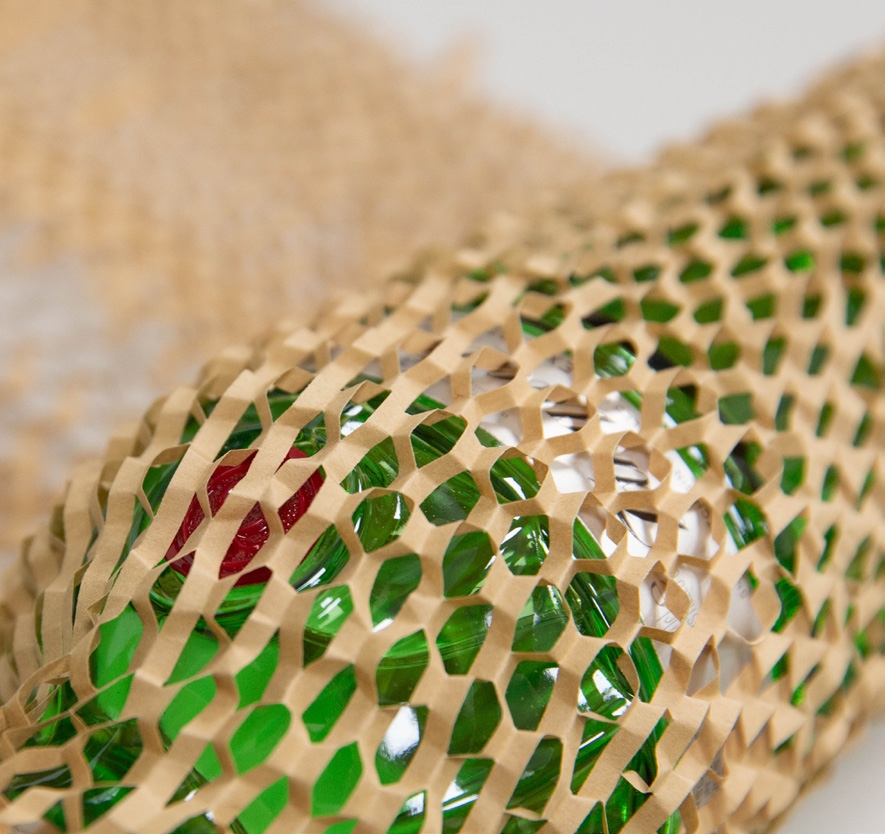
Protega Global’s HexaFil paper void fill expands during dispensing to create a cushioning structure around products and stabilise pack contents.
Designed as a paper-based alternative within honeycomb protective packaging formats, Hex-a-Fil provides an efficient void fill solution that can be deployed without powered inflation equipment.
Key operational advantages of Hex-a-Fil include:
- Honeycomb expansion geometry for cushioning and product separation
- Lightweight manual dispensing for straightforward operator handling
- Reduced packaging waste compared with plastic protective formats
- Compact workstation footprint
- Improved packing ergonomics and line efficiency
- Fewer roll changes during high-volume dispatch periods
Hex-a-Fil can be deployed directly at the packing bench or integrated with an adjustable overhead stand to support efficient dispensing within compact packing environments.
Sustainable packaging that strengthens customer perception
Consumers and procurement teams are becoming increasingly attentive to the environmental profile of packaging materials.
Selecting recyclable paper void fill allows businesses to demonstrate plastic-reduction initiatives while improving pack presentation and the post-delivery customer experience.
Paper-based packaging also supports a cleaner, more standardised presentation for goods delivered to end users.
Industries that benefit from paper void fill
Paper void fill systems are suitable for a wide range of sectors that require protective, presentable, and operationally efficient packaging solutions.
Common sectors using paper void fill include:
- E-commerce and online retail
- Cosmetics and beauty brands
- Food and beverage packaging
- Electronics and accessories
- Subscription boxes
- Gift and luxury products
- Warehousing and fulfilment operations
- Homeware
- Automotive
Conclusion
As businesses continue to reduce plastic input across their supply chains, paper void fill is becoming an increasingly practical specification for protective packaging applications.
By switching to recyclable void fill materials such as Hex-a-Fil, businesses can improve pack consistency, support sustainability targets, and deliver a cleaner, more controlled packaging experience.